The Seine, Lifeline of Paris: 2,000 Years of History on the Water
The Seine is not merely a river that crosses Paris: it is Paris. For two millennia, this 776-kilometer waterway has shaped the geography, economy, architecture, and very soul of the French capital. From Lutetia to the modern metropolis, every era has left its mark on its banks. To trace the history of the Seine is to journey through the entire history of France.
Lutetia: Paris is born on the Seine
The story begins on the Île de la Cité, the cradle of Paris. Around the 3rd century BCE, the Gallic tribe known as the Parisii settled on this island, naturally protected by the arms of the river. The location was strategic: the Seine allowed them to control trade between northern and southern Gaul.
After the Roman conquest in 52 BCE, Lutetia developed on the Left Bank. The Romans built baths, a forum, and an amphitheater, but the river remained the driving force of the city. The Pillar of the Nautes, a votive monument erected by the boatmen’s guild in the 1st century, proves that the Seine was already at the center of economic and religious life. Discovered in 1711 beneath the choir of Notre-Dame, it is the oldest known monument in Paris.
The Middle Ages: the Seine feeds and protects Paris
During the Middle Ages, the Seine became the vital artery of a rapidly expanding city. The river supplied Paris with food, building materials, and fuel. Watermills multiplied beneath the bridges, while the water merchants gained considerable power. The Hanse des marchands de l’eau (Guild of Water Merchants), founded in the 12th century, controlled all river traffic and laid the foundations of the Parisian municipality.
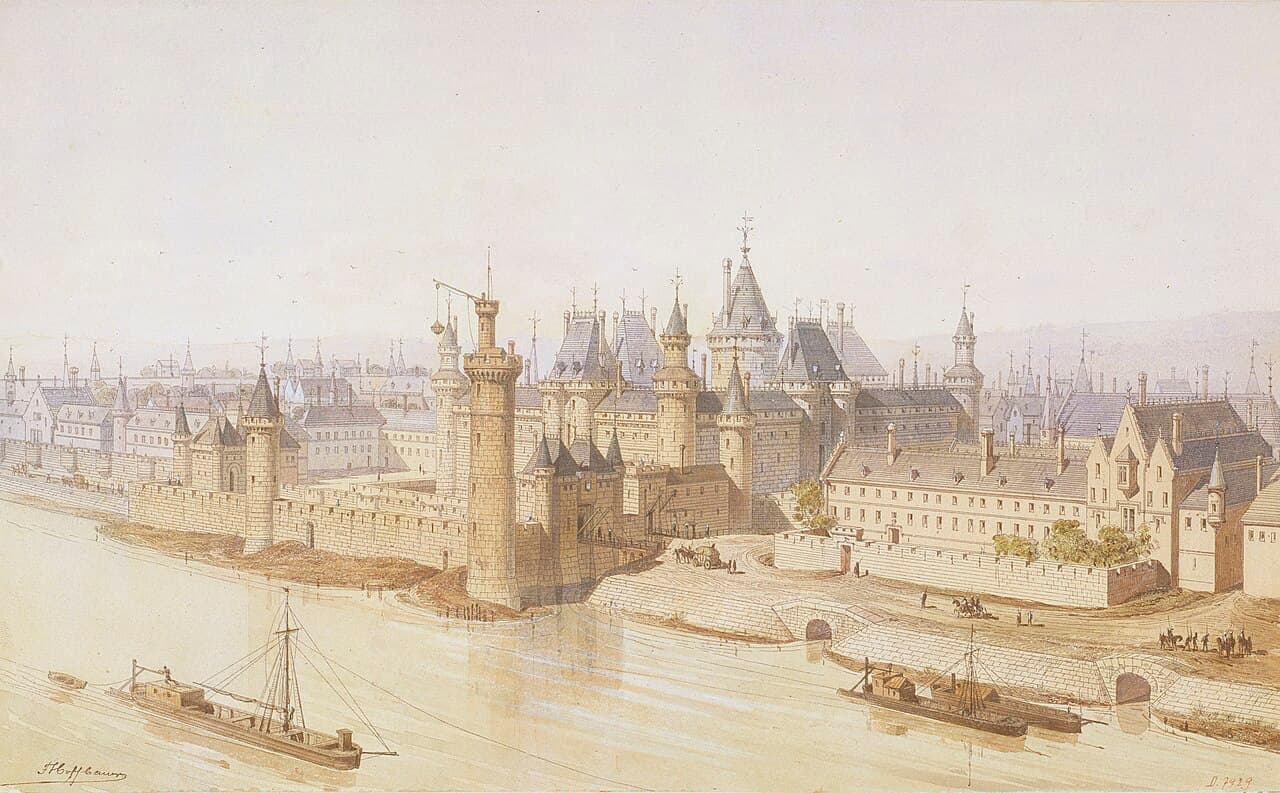
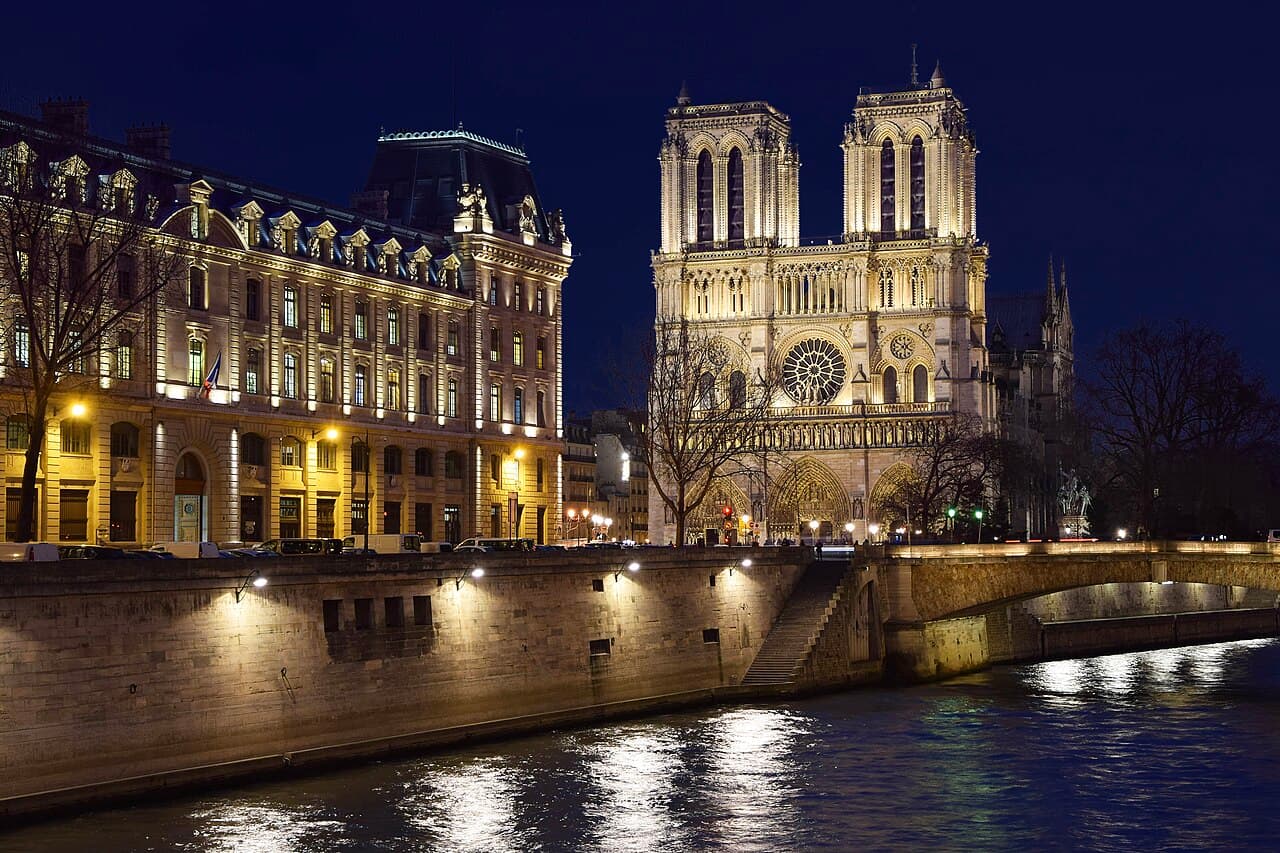
This was also the era of grand construction along the riverbanks. The building of Notre-Dame de Paris began in 1163, with stones arriving by river from the quarries of the Oise. The Louvre, initially a medieval fortress, was built along the Right Bank. The Sainte-Chapelle, a jewel of Rayonnant Gothic architecture, rose on the Île de la Cité in 1248. All these monuments, still admired today from the Seine, testify to the river’s central role in Parisian urban planning.
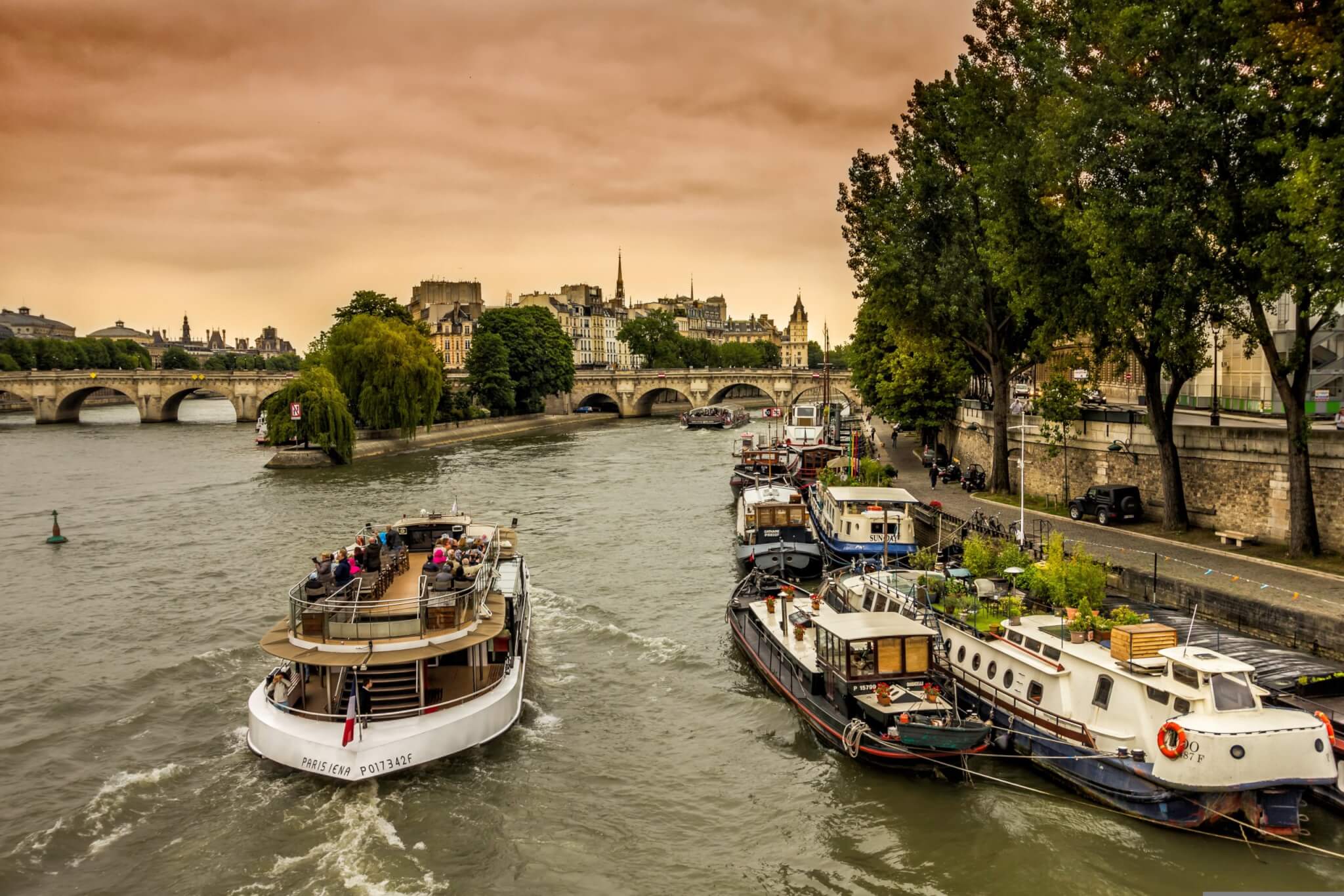
The bridges of Paris also tell this story. The Pont-Neuf, despite its name (« New Bridge »), is the oldest standing bridge in Paris, inaugurated by Henry IV in 1607. The first bridge without houses, it offered an unobstructed view of the river for the first time, transforming the relationship between Parisians and their Seine.
The Great Works: Haussmann and the quays of the Seine
Under the Second Empire, Baron Haussmann radically transformed the face of Paris, and the Seine was no exception. Between 1853 and 1870, the banks were reinforced, the quays were lined with masonry and widened, and access routes to the river were redesigned. The quays of the Seine became true tree-lined promenades.
Haussmann also ordered the construction of large sewer collectors that diverted wastewater away from the Seine, greatly improving the river’s sanitation. The bouquinistes (second-hand booksellers), already present since the 16th century, established themselves permanently on the quay parapets, creating the open-air bookshop that still defines the charm of the riverbanks today. In 1991, the banks of the Seine in Paris were inscribed as a UNESCO World Heritage Site, the ultimate recognition of the unique harmony between a river and its city.
1910: the great flood, Paris underwater
The history of the Seine is not only a story of glory. In January 1910, Paris endured one of its worst natural disasters. After weeks of rain, the river reached 8.62 meters at the Pont d’Austerlitz, compared to the normal 2 meters. The flood of 1910 submerged entire neighborhoods: the Marais, the Gare Saint-Lazare, and part of the 7th arrondissement were underwater.
The Zouave statue on the Pont de l’Alma, a military figure installed in 1856, then became the popular benchmark for the Seine’s water level. When « the Zouave’s feet are in the water, » Parisians start worrying. In 1910, the water reached his shoulders. The city took months to recover from this historic flood, and the threat of another great flood is still taken very seriously by authorities.
The Seine today: living heritage and a place of wonder
In the 21st century, the Seine is experiencing a genuine renaissance. The pedestrian riverbanks, inaugurated on the Left Bank in 2013, have given the river back to Parisians and strollers. Péniches (traditional barges) have been transformed into living spaces, restaurants, and cultural venues. In 2024, the Seine took center stage during the opening ceremony of the Paris Olympic Games, a historic nautical parade that consecrated the river as the capital’s most beautiful avenue.
Swimming in the Seine, banned since 1923, has become a concrete goal once again, a sign that the river is regaining an environmental quality lost for a century. Paris is reconnecting with its waterway, and the Seine is once again a place of life, celebration, and discovery.
To take in these 2,000 years of history in a single glance, nothing rivals a cruise on the river. From the deck of a boat, every bridge, every monument, every quay tells a chapter of the great Parisian adventure. With Un Bateau à Paris, board the Sénang departing from the Port de l’Arsenal for a private cruise that transforms the river into an open-air history book. Discover our cruise packages and live this unique experience with friends or family, on the water and through the ages.